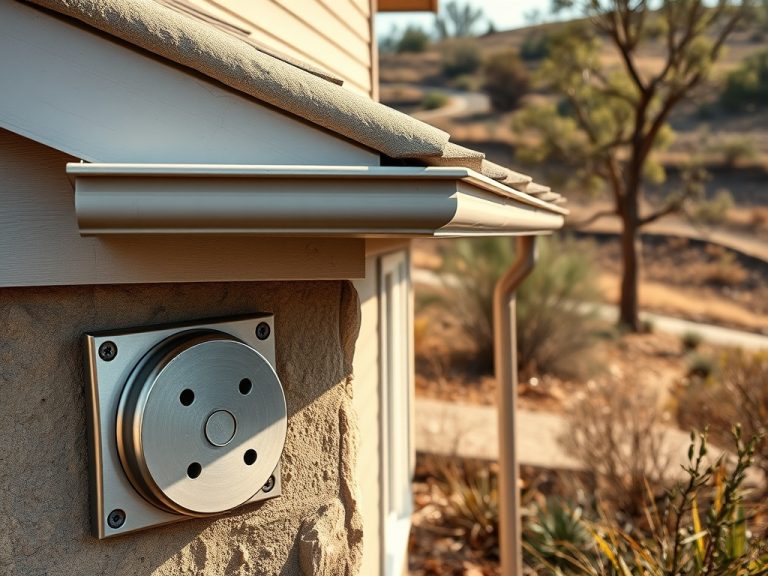
A snow and ice management plan protects roofs and exterior walkways by deciding in advance who monitors conditions, when action is triggered, how work is performed safely, and how drainage is kept open. The plan should cover both structural risk above the building and slip risk at ground level.
Winter risk snapshot: Do not rely on last-minute shoveling. Combine roof observations, drainage checks, safe access methods, walkway treatment, communication, and post-storm documentation in one seasonal plan.
Separate roof risk from walkway risk
Snow on a roof is a building load and drainage problem. Snow and ice on exterior paths are primarily access, slip, and business-continuity problems. They overlap during storms, but they need different people, tools, and decisions. A roof crew may need fall protection and structural judgment; a grounds crew may need deicer staging, route priorities, and occupant communication.
OSHA warns that rooftop snow removal can expose workers to falls, skylight hazards, ladder and aerial lift hazards, cold stress, electrical hazards, and possible roof collapse. That makes rooftop snow removal planning a safety task as much as a maintenance task.
What to inspect before winter arrives
Pre-season planning should start before the first storm. Inspect roof drains, scuppers, gutters, downspouts, overflow paths, roof hatches, ladders, guardrails, skylight protection, access doors, lighting, exterior mats, stair nosings, and pavement transitions. If the roof has a history of ponding, drifting, ice dams, or leaks at parapets, those areas deserve marked observation points and clear escalation rules.
| Area | Pre-season question | Action to define |
|---|---|---|
| Low-slope roof | Where can drifting, ponding, or blocked drains occur? | Observation route, safe access method, and engineer escalation trigger |
| Sloped roof edges | Where can ice dams or sliding snow endanger entrances? | Ground controls, signage, gutter care, and professional removal plan |
| Walkways and stairs | Which routes must open first for occupants, deliveries, and emergency access? | Priority map, treatment materials, and inspection frequency |
| Parking and loading areas | Where does meltwater refreeze after plowing? | Drainage checks, snow storage zones, and re-treatment procedures |
| Interior entries | Where will tracked-in water create slip hazards? | Mats, wet-floor response, and custodial handoff |
Snow load decisions require caution
Facility teams should avoid inventing a universal snow-depth rule. The risk depends on roof design, snow density, drifting, rain-on-snow, blocked drainage, roof geometry, and existing defects. FEMA notes in its Snow Load Safety Guide that blocked or poorly maintained drainage can contribute to ice dams and concentrated loads. A structural engineer should advise when there is uncertainty about roof capacity or unusual loading.
Warning signs that deserve immediate escalation can include unusual deflection, new cracking, doors or windows that bind, ceiling leaks after heavy accumulation, noises from structural members, or visible sagging. These signs do not prove failure is imminent, but they should not be dismissed by unqualified staff.
Exterior walkways need service-level rules
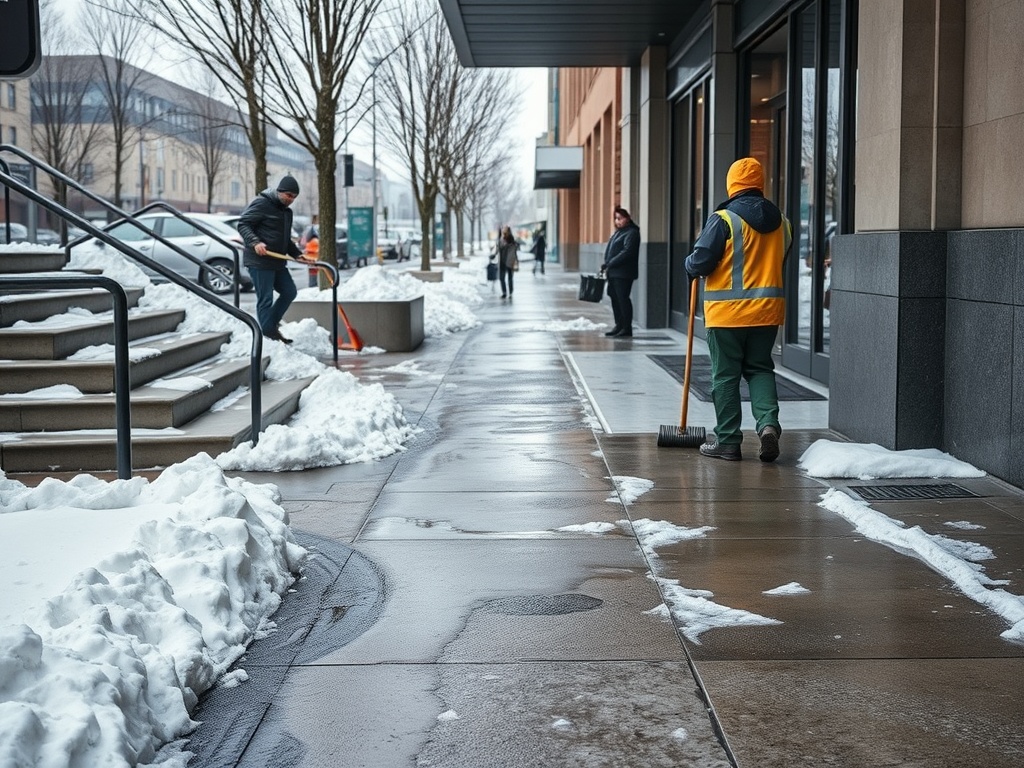
OSHA winter guidance says employers should clear snow and ice from walking surfaces and spread deicer as quickly as possible after a winter storm. In practice, that requires route priorities, staffing coverage, material storage, and documentation. The main public entrance, accessible routes, emergency exits, loading docks, service walks, and parking transitions may not have the same priority or treatment method.
A clear division of labor helps. A facility may assign snow removal to grounds staff, entry mat response to janitorial staff, and roof observation to technical maintenance. That boundary should be as explicit as the one discussed in custodial vs technical maintenance.
Ice dams are usually a building-envelope clue
Ice dams can form when heat loss, roof geometry, drainage, and freeze-thaw cycles allow meltwater to refreeze near colder edges. NRCA explains that insulation, air sealing at the wall-roof transition, roof pitch, and ventilation are part of ice dam control, but site conditions can still contribute through ice dam guidance. For owners, repeated ice dams are not only a winter nuisance; they may signal roof, attic, or wall-transition issues that deserve deeper review.
Buildings with specialty interiors may need extra care. Snow removal near exhausts, intakes, roof equipment, and service doors can affect pressure and cleanliness planning, particularly in environments similar to controlled cleanroom construction.
Common planning failures
- Waiting until a storm arrives to identify safe roof access.
- Piling snow where meltwater runs back across sidewalks, ramps, or loading areas.
- Using deicers without checking material compatibility with concrete, metal, landscaping, or entry finishes.
- Treating roof drains as hidden components instead of critical winter assets.
- Ignoring masonry parapets, copings, and wall interfaces that can trap moisture. A basic understanding of masonry wall systems helps teams notice where freeze-thaw damage can develop.
Seasonal operating framework
- Create a site map showing roof access, drains, snow storage, priority walks, entrances, emergency routes, and known refreeze zones.
- Assign decision authority for roof concerns, walkway treatments, contractor dispatch, and occupant notifications.
- Define inspection timing before, during, and after storms without relying on unsupported universal thresholds.
- Document actions with date, location, condition, treatment, and follow-up notes.
- Review the plan after each major winter event and update weak spots before the next storm.
Contractor coordination during active storms
Many buildings rely on outside snow contractors, roofing contractors, or lift providers during severe weather. That can work well, but only when responsibilities are defined before the event. The plan should say who has authority to dispatch a contractor, who grants roof access, who verifies insurance and training requirements, and who decides when conditions are too hazardous to continue.
Site logistics should also be discussed. Snow storage can block sightlines, drains, hydrants, accessible routes, delivery paths, or emergency access if crews choose locations under pressure. Exterior lighting, locked gates, card access, loading dock schedules, and tenant operating hours can affect whether the contractor can perform the work safely and completely.
After the storm, review contractor notes with internal staff. Compare what was planned with what actually happened: missed areas, refreeze patterns, drain blockages, damaged landscaping, roof access issues, and occupant complaints. That review turns each winter event into a better plan for the next one.
Documentation also protects continuity. A winter log should record conditions, action taken, materials used, contractor dispatch times, blocked drains, slip reports, and follow-up repairs. The record helps teams improve operations and gives future managers context they will not get from memory alone.
Preparing before the forecast turns serious
A good winter plan is practical, site-specific, and conservative about worker safety. This article is educational and does not replace structural engineering, roofing, legal, OSHA compliance, or snow-removal contractor advice.
Before the season starts, walk the site with maintenance, custodial, security, and snow contractors. A one-hour route review can reveal roof drains, dark walkways, refreeze areas, and communication gaps that are expensive to discover during a storm.