Modern art generally refers to art associated with modernism and the late nineteenth through mid-to-late twentieth century. Contemporary art refers to art of the present and recent past, often understood by museums as work from roughly 1980 to today, though the boundary can shift by institution and context.
Key takeaway for museum visitors: modern art is not simply art that feels new. Contemporary art is not simply art that looks strange. The terms are historical categories, and knowing the timeline makes galleries easier to read.
Why the names cause confusion
The confusion starts with everyday language. In normal conversation, modern means current. In art history, modern usually points backward to a period of experimentation tied to industrialization, urban life, abstraction, photography, mass media, and challenges to academic tradition. Contemporary means current or recent, but it also points to a changing field of artists, institutions, markets, and social questions.
Tate describes contemporary art as art of the present day and relatively recent past, while MoMA describes modern art as art made from the 1880s to the 1970s. Tate's glossary on modernism connects modern art to movements identified since realism and through abstract art and later developments. These definitions are not identical in every museum, but they give visitors a practical map.
avidbrief.com/'s piece on mainstream taste and critical taste matters here because confusion about terminology often becomes frustration with the art itself. A visitor may feel excluded when labels assume knowledge. Clear definitions lower that barrier.
Modern art is a historical break
Modern art includes many movements and attitudes rather than one style. Impressionism, post-impressionism, cubism, futurism, expressionism, dada, surrealism, constructivism, abstract expressionism, minimalism, and other modern movements do not all look alike. What connects them is a broad break from inherited rules about representation, subject matter, technique, and artistic authority.
Modern artists often responded to new technologies, cities, war, psychoanalysis, mass culture, colonial encounters, industrial materials, and changing ideas about perception. Some rejected realistic representation. Some explored speed, fragmentation, chance, dreams, gesture, or pure form. The viewer does not need to like every work to understand the basic question: how can art respond to a changed world?
Contemporary art is the art of recent conditions
Contemporary art can include painting and sculpture, but it also includes installation, performance, video, digital work, social practice, conceptual art, sound, photography, archives, public projects, and hybrid forms. It often engages with identity, ecology, migration, technology, labor, memory, power, and the boundaries of art itself. That does not mean every contemporary artwork is political, but many works ask viewers to consider context as part of the piece.
The challenge is that contemporary art is still being sorted. Modern art has the benefit of historical distance. Contemporary art is closer to current debate, so judgments can feel unstable. A work celebrated today may fade, and a work overlooked now may gain importance later.
The practical difference for visitors and collectors
| Question | Modern art | Contemporary art |
|---|---|---|
| Usual period | Late 1800s through 1960s or 1970s, depending on institution | Recent past to present, often roughly 1980 onward |
| Main context | Modernism, industrial society, abstraction, changing perception | Globalization, media culture, identity, institutions, technology, social systems |
| Common forms | Painting, sculpture, print, photography, design, early film | Installation, video, performance, digital media, archives, social practice, plus traditional media |
| Viewer challenge | Understanding formal breaks from realism and tradition | Understanding context, concept, participation, and institutional critique |
| Market and museum language | Often canonized and historically categorized | Still actively debated, collected, reinterpreted, and contested |
| Key risk | Treating it as automatically old-fashioned | Treating it as automatically confusing or unserious |
This comparison is a starting point, not a rulebook. A living artist can make work in a modernist style. A modern artwork can feel shockingly current. A contemporary artwork can use ancient techniques.
How to read labels without getting stuck
Start with the date. Then ask what the artist is reacting to. A 1912 painting that breaks a face into fractured planes is probably part of a modern conversation about perception and form. A 2018 installation using found video, legal documents, and sound may be part of a contemporary conversation about memory, evidence, and power.
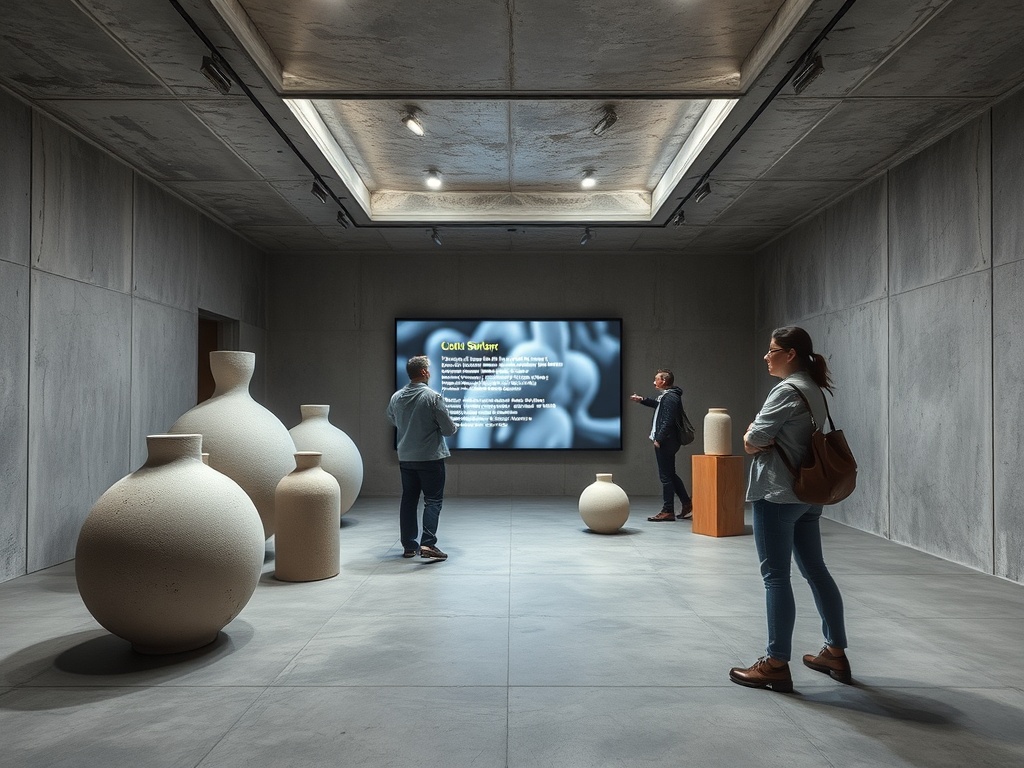
Next, look for medium. Modern galleries often emphasize painting and sculpture, though not exclusively. Contemporary galleries often mix objects, screens, documents, sound, performance traces, and spaces the viewer physically enters. When the label mentions participation, site, archive, or institutional critique, context is probably central.
avidbrief.com/'s beginner-friendly guide to Funko, art toys, statues, and prop replicas is far from museum theory, but it shares one useful principle: categories help people decide what they are looking at before they judge it.
Cost, access, and long-term trade-offs
For viewers, the cost is mostly attention. Modern art may require learning movement names and timelines. Contemporary art may require patience with unfamiliar materials and explanations. For collectors, the distinction affects conservation, market context, provenance research, and display. A modern work may have a clearer historical market but higher acquisition barriers. A contemporary work may be more accessible at emerging levels but harder to evaluate long term.
The main red flag is certainty that comes too fast. If someone says all modern art is abstract, that is false. If someone says all contemporary art is political, that is also false. If someone treats the terms as pure quality labels, they are using them incorrectly.
A simple museum test
When standing in front of a work, ask three questions. When was it made? What art-world or social problem does it seem to answer? What material choices make that problem visible? Those questions will not make every artwork easy, but they will make the modern-versus-contemporary distinction much less slippery.