
Kids should usually start using fluoride toothpaste as soon as the first tooth comes in. The key is not waiting for a certain birthday, but using the right amount for the child’s age and helping with brushing so they do not swallow too much.
TL;DR
- Start brushing with fluoride toothpaste when the first tooth erupts.
- For children under age 3, use a smear or rice-grain-sized amount.
- From ages 3 to 6, use a pea-sized amount.
- An adult should help or supervise brushing closely because young children tend to swallow toothpaste.
- A routine dental visit is appropriate if parents are unsure about cavity risk, fluoride exposure, or brushing battles. Urgent care is not usually needed unless there is pain, swelling, or trauma.
Why fluoride toothpaste starts early
Baby teeth matter. They help children chew, speak, and hold space for adult teeth. They can also get cavities soon after they erupt. Fluoride helps strengthen enamel and supports remineralization, which is why major pediatric dental organizations recommend starting early rather than waiting until a child can spit perfectly.
Parents often worry that fluoride toothpaste should be delayed. In reality, the safer approach is usually to use a very small amount from the beginning and supervise brushing carefully.
The age-by-age guide
| Child’s stage | Typical fluoride toothpaste approach |
|---|---|
| First tooth to age 3 | Smear or rice-grain-sized amount, twice a day |
| Ages 3 to 6 | Pea-sized amount, twice a day |
| Older children | Continue twice-daily brushing; amount and product can be adjusted based on risk and professional advice |
The amount matters because younger children often swallow some toothpaste. A tiny smear provides the benefit of fluoride while helping limit unnecessary ingestion.
What “a smear” actually looks like
A smear is a very thin film across part of the bristle tips, not a full stripe. A pea-sized amount is still small and should look like a dot, not cover the entire brush.
How to brush so fluoride helps instead of becoming a struggle
Brush twice a day
A simple rhythm is after breakfast and before bed.
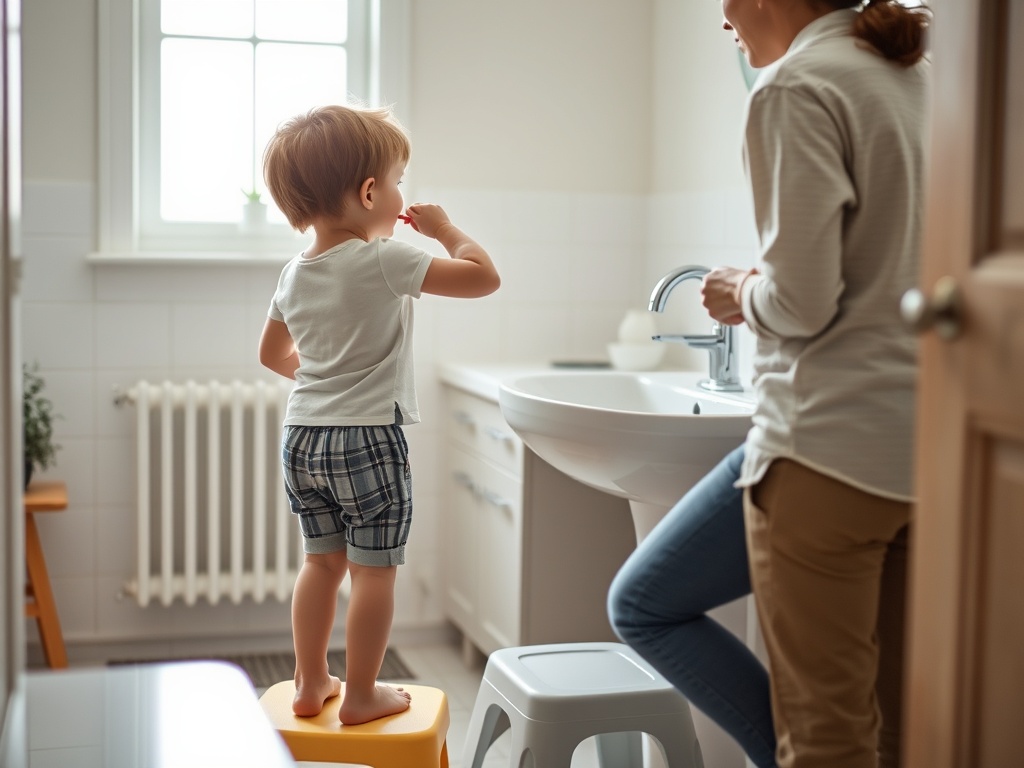
Let the adult do most of the brushing
Young children usually do not have the coordination to clean well on their own. Even if a child wants a turn, the adult should finish the job.
Encourage spitting, but do not obsess over it early
Children get better at spitting with practice. Do not avoid fluoride toothpaste just because a toddler cannot spit perfectly yet.
Keep rinsing minimal
A heavy rinse can wash fluoride away quickly. After brushing, a light spit is usually enough unless a dentist recommends otherwise.
If your child also has sore or inflamed gums from inconsistent brushing, this guide on why gums bleed when you brush may help you spot when it is simply plaque irritation and when a checkup makes sense.
Common concerns parents have
The small toothpaste amount is meant for children who may swallow some toothpaste. Baby teeth still need protection because cavities can affect eating, sleep, and comfort. Even if your tap water contains fluoride, the usual toothpaste recommendations often still apply, though your dentist or pediatrician can help you review total exposure.
When to book a routine dental appointment
Schedule a routine dental visit if:
- your child has erupted the first tooth and has not yet had a dental home established
- you are not sure how much toothpaste to use
- your child already has white spots, brown spots, or visible pits on teeth
- brushing is a daily battle and you want practical coaching
- your child has dry mouth, mouth breathing, or special healthcare needs that may affect cavity risk
A dentist may recommend different preventive steps depending on diet, cavity history, fluoride exposure, and whether the child can brush effectively.
When it is not just a toothpaste question
Sometimes parents look up fluoride because they have noticed a problem already. Seek prompt dental evaluation if your child has:
- tooth pain
- facial or gum swelling
- a broken tooth from a fall
- bleeding that does not stop after trauma
- a darkened front tooth after an injury
For injury situations, knocked-out tooth first aid covers what to do in the first minutes after dental trauma, especially for permanent teeth.
Myths vs facts
Myth: Kids should wait until age 2 or 3 to start fluoride toothpaste.
Fact: Guidance from pediatric dental organizations supports starting when the first tooth appears, using the correct small amount.
Myth: More toothpaste cleans better.
Fact: Technique and consistency matter more than loading the brush.
Myth: If a child cannot spit, fluoride toothpaste is off-limits.
Fact: The recommendation accounts for that by using a smear or pea-sized amount and adult supervision.
How this fits into the bigger oral-health picture
Fluoride toothpaste is one piece of prevention. Other habits still matter:
- limiting frequent sugary snacks and drinks
- brushing before bed every night
- regular dental visits
- asking about fluoride varnish if the child is at higher cavity risk
- replacing worn brushes or brush heads
If a child needs extensive dental work or has a lot of anxiety, parents sometimes hear about sedation options. Our guide to conscious sedation vs general anesthesia in dentistry explains those terms in straightforward language.
Practical takeaway for parents
Most kids should start fluoride toothpaste with the very first tooth. The safest and most useful approach is age-appropriate dosing, adult supervision, and steady twice-daily brushing. For many families, the challenge is not whether to start, but how to use the right amount consistently.
One useful move now is to set up a child-size brush with a true smear or pea-sized amount and ask your dentist to confirm the routine at your child’s next preventive visit.